1. Mention some laws achieved by workers in England improving their work conditions.
The 8-hour work day, insure members against unemployement, old age, ill, etc.
2. What happened the first of May?
The 8-hour work day was proclaimed in the United States. It is called May Day or Labour Day.
3. Look for information about the suffragettes. Who was Emily Davison?
Suffragette is a name for members of the movement for the women's suffrage in the United Kingdom, in particular members of the Women's Social and Political Union. They wanted to participate in politic and be treated as equals to men.
Emily Davison was a militant women's suffrage activist. She joined the Women's Social and Political Union. Three years later, she left her job as a teacher and went to work full-time for the suffragette movement. She was frequently arrested for causing a public disturbance to burning post boxes and spent a number of short periods in jail. She died after throwing herself in front of the king's horse at the Epsom Derby.

A guerra de Vietnam foi un conflicto bélico que enfrentou entre 1955 y 1975 á República de Vietnam, ou Vietnam do Sur, apoiada principalmente polos Estados Unidos, contra a República Democrática de Vietnam, ou Vietnam do Norte, apoiada polo bloque comunista.
A República Democrática de Vietnam contou co apoio de movementos guerrilleiros norvietnamitas como o Viet Cong ou Fronte de Liberación Nacional e de suministros soviéticos e chinos. Polo outro lado, a República de Vietnam tivo apoio militar e loxístico dos Estados Unidos. En axuda dos estadounidenses tamén participaron tropas de combate de Australia, Corea do Sur, Filipinas, Nova Zelanda e Tailandia. Outros países como Alemaña, Irán, Marrocos, Reino Unido e Suiza contribuíron con suministros materiais e equipamento médico. Continxentes testimoniais en apoio dos Estados Unidos foron enviados por Taiwán e España, que mobilizou a un reducido grupo de médicos militares en misión sanitaria.
No bando de Vietnam do Norte morreron 10 veces máis persoas que no do Sur. Aínda así, despois do fin da guerra, co triunfo do norte comunista sobre o sur, a guerra de Vietnam quedou marcada na moral e na opinión pública como a segunda derrota na historia militar dos Estados Unidos, despois da Guerra de Corea.

Imaxina que non hai paraíso,
é fácil se o probas.
Sen inferno debaixo de nós
e enriba só o ceo.
Imaxina a toda a xente
vivindo para hoxe.
Imaxina que non hai países
non é duro de facer.
Nada polo que vivir ou morrer
e sen relixión tamén.
Imaxina a toda a xente
vivindo a vida en paz.
Pode que digas que son un soñador,
pero non son o único.
Espero que algún día te unas a nós
e o mundo sexa como un só.
Imaxina que non hai posesións,
pregúntome se podes.
Sen necesidade de gula ou fame,
unha fraternidade de homes.
Imaxina a toda a xente
compartindo o mundo enteiro.
Pode que digas que son un soñador,
peno non son o único.
Espero que algún día te unas a nós
e o mundo viva como un só.
He criticises the industrialism and the hard work the workers had to do in factories.


Thomas Edison was born on February 11 in 1847 and was an American inventor, bussinesman and sciencist. He has made numerous inventions that contributed to telecomunications.
When he was a child his mother homeschooled him. Much of his education came from reading R.G. Parker's School of Natural Philosophy and The Cooper Union.
Thomas Edison began his career as an inventor in Newark, New Jersey, with the automatic repeater and the telegraph, but the invention with he ganed his fame was the phonograph in 1877.
The Edison's major innovation was the first industrial lab, which was built in Menlo Park, New Jersey. It was built with the funds from the sale of Edison's quadruplex telegraph.
In 1877–1878, Edison invented and developed the carbon microphone used in all telephones along with the Bell receiver until the 1980s. The carbon microphone was also used in radio broadcasting and public address work through the 1920s.
Edison made a lot of improvements to the idea of incandescent light, and he was known "the inventor" of the light bulb.
Thomas Edison died on October 18, 1931.
http://www.youtube.com/watch?v=Qom7VCi4cZk
She sings an ecological song. She criticizes the building and the pollution and defends the nature.
What is a multinational corporation (MNCs)?
Is an enterprise that manages production or delivers services in more than one country.
Write a few lines about its characteristics
They have factories worldwide, they operates in several countries, normally a small group of people runs it, adopts the new technologies very quickly and they use resources very efficiently
State the main 5 industrial MNCs and the country they are from
Micorosf (USA), Inditext (Spain), Sony (Japan), Samsung (South Korea) and Nokia (Finland)
Advantages: It gives jobs to a lot of people and it will protec them from flooding.
Disadvantages: A lot of people will be removed because the dam needs more space. There are a lot of earthquakes and landslides and it's dangerous.

1. Solar - e
2. Wind - a
3. Tidal - f
4. Geothermal - b
5. Hydro-electric power - c
6. Biomasa - d
A)
Oil: mineral power
Iron: mineral metallic
Bauxite: mineral metallic
Silk: animal
Cotton: vegetal
Milk: animal
Gold: mineral metallic
Coal: mineral power
Tuna: animal
Wood: vegetal
Granite: mineral non-metallic
Diamond: minaral non-metallic
Skin: animal
Salt: mineral non-metallic
Ivory: animal
Cooper: mineral metallic
Tomatoes: vegetal
Sulphur: mineral metallic
Mercury: mineral metallic
Wool: animal
Linel: vegetal
Resin: vegetal
Rubber: vegetal
Cork: vegetal
B)
Shoes: skin
Chairs: wood
Juice: fruits
Jewels: gold, diamonds
Keys: iron
Thermometers: mercury
Window: wood, glass
Doors: wood
Notebook: paper
Sweaters: wool
Oil: oil
- Agriculture provides employment.
- Food production continue to rise.
- Trade in agricultural products has increased.
- Farmland accounts for about 36% of global land use.
- Agriculture provides the basis of many manufacturing and service industries.

1. Shifting cultivation

2. Wet rice farming
 3. Market gardening

4. Extensive commercial farming
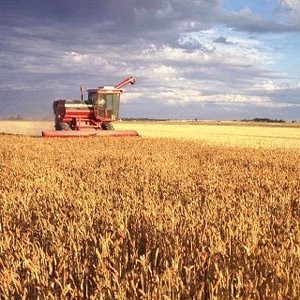


CAP: Common Agricultural Policy. Is a system of European Union agricultural subsidies and programmes.
BSE: Bovine Spongiform Encephalopathy. It causes a spongy degeneration in th brain and spinal cord.
GM FOODS: Genetically Modified foods. They have had specific changes introuces into their DNA.
GREEN REVOLUTION: Is the transformation of agriculture that began in 1945.
Subline the main characteristics:
- Private property
- The demand and supply (the market) establishes the prices
- Public property
- Cycle crisis
- The State established the prices
- The State controls the economy
- Achieve the highest profit
- Endevour to give services to the citizens
 The final price is the balance among the supply and the demand.
If the demand is high, the price is going to be high; and if the demand is low; the price is going to be low.
If the supply is high, the price is going to be low; and if the supply is low, the price is going to be high.

a) Who produces more manufactured goods, MEDCs or LEDCs? MEDCs
b) And raw materials? LEDCs
c) What happens to the value of manufactured goods? (increase/decrease price) The manufactured goods are always more expensive than the raw materials.
d) And with raw materials? Their value go up and drop, but always go up a little.
e) Which are the consequences for LEDCs:
- They sell more raw materials and increase their profit
- They buy manufactured goods at high prices and sell raw materials at low prices and then increase their debt.
